RMB - Investment Banking

Five systems, one workflow, zero rework

00

problem

Investment bankers at RMB were managing the full deal lifecycle - pricing, contracting, term sheets, circulation - across five separate legacy systems and Microsoft Excel. Data didn't carry between systems, so bankers were manually re-entering information at every stage. Deals were circulated among team members over email, causing version control issues and delays. Many bankers had reverted to an older system simply because it was familiar, even though it was limited - a clear signal that the newer tools had failed to earn trust.

problem

Investment bankers at RMB were managing the full deal lifecycle - pricing, contracting, term sheets, circulation - across five separate legacy systems and Microsoft Excel. Data didn't carry between systems, so bankers were manually re-entering information at every stage. Deals were circulated among team members over email, causing version control issues and delays. Many bankers had reverted to an older system simply because it was familiar, even though it was limited - a clear signal that the newer tools had failed to earn trust.

solution

A single Workbench platform supporting the entire deal lifecycle in one place - from initial pricing through contracting, term sheets, and team circulation. Designed to match the efficiency and data density that investment bankers expected from Excel, while eliminating the fragmentation, rework, and human error risk that came with five disconnected systems.
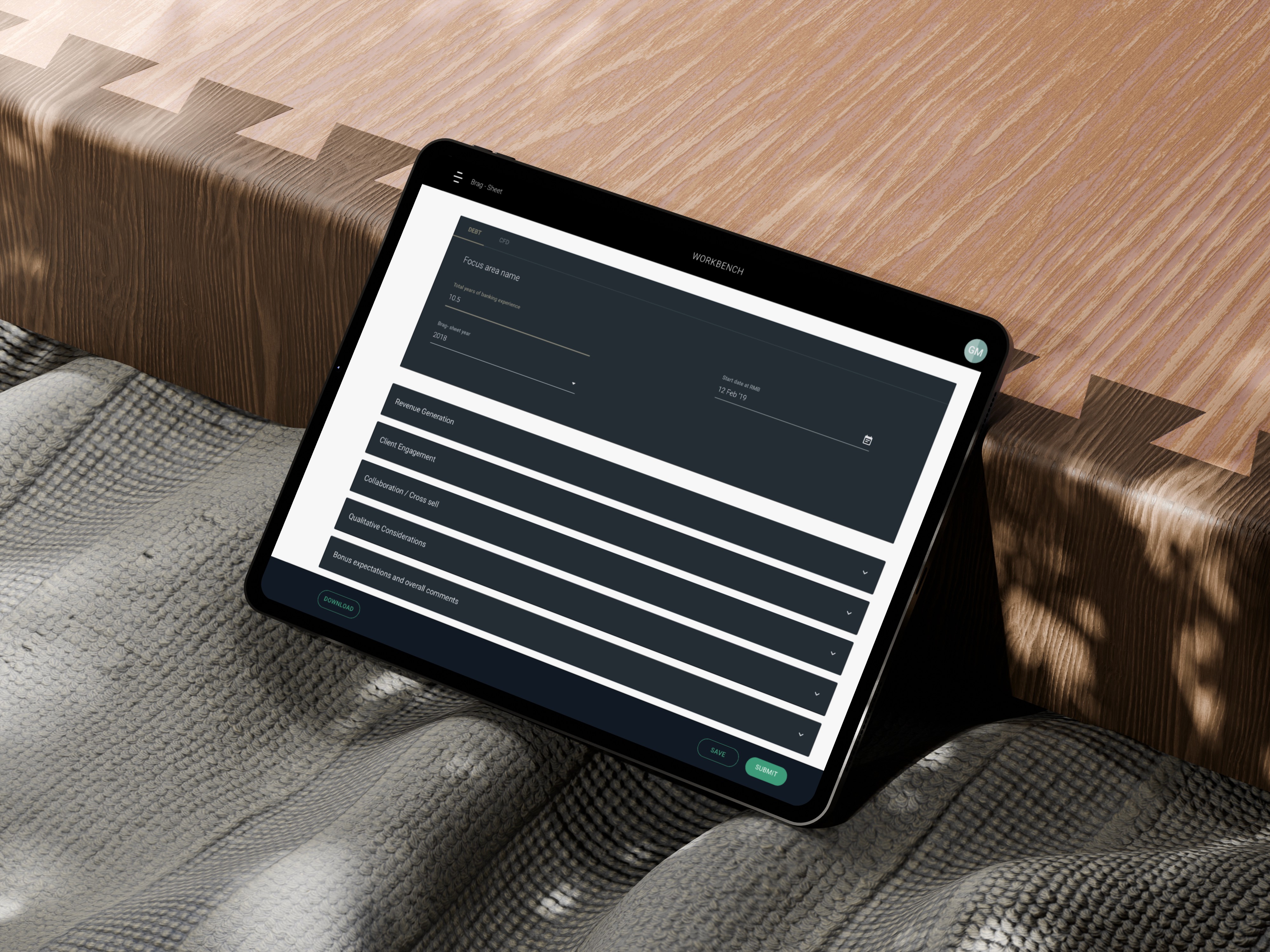
The challenge was to consolidate multiple fragmented internal systems into a single platform that could support the complex workflows of investment banking teams.

Rather than simply combining functionality, the goal was to redesign how work was done — reducing duplication, minimising error, and improving efficiency across the deal lifecycle.

The result was a unified platform that streamlined workflows, reduced manual effort, and better supported the way bankers actually work.

year

2019

timeframe

7 months

tools

Figma, Miro

category

UI/UX
approach

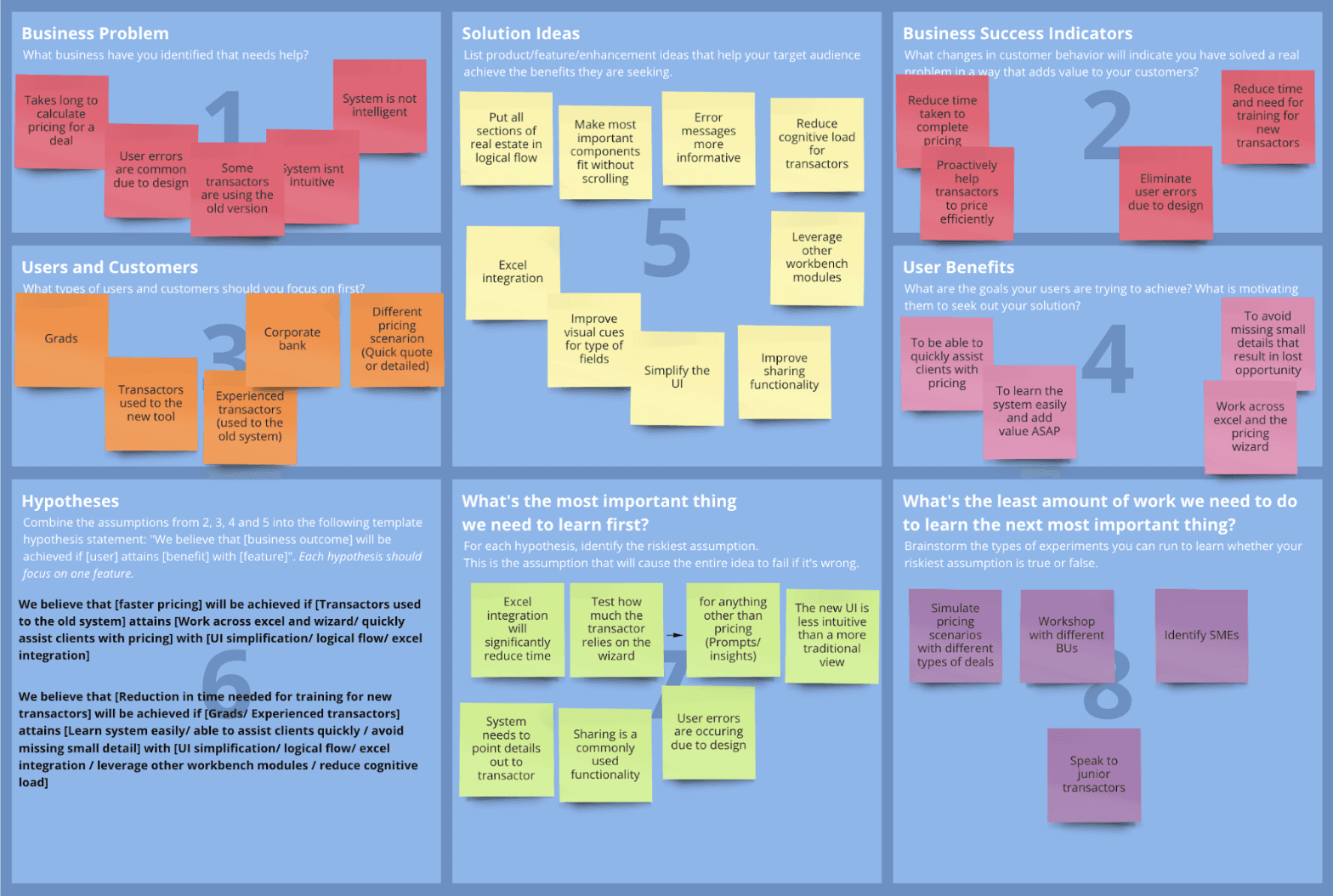
The goal was to unify fragmented systems into a single, cohesive platform that better supported the way investment bankers actually work.

Three key principles guided the solution:

Consolidate workflows → Bring multiple disconnected tasks and systems into a single, streamlined experience

Reduce duplication → Enable continuity of data across workflows to eliminate rework and minimise human error

Design for efficiency → Prioritise speed, flexibility, and control for expert users operating in high-pressure environments

UI & experience

The experience was designed to support complex, data-heavy workflows while enabling users to work efficiently and with confidence.

Layouts prioritised high information density without sacrificing clarity — allowing users to view, compare, and act on data within a single screen wherever possible. This reduced the need for excessive navigation and context switching.

Interactions were designed to mirror familiar tools and behaviours, ensuring a smoother transition from legacy systems and tools like spreadsheets. Flexibility and customisation were also considered to accommodate different user preferences and workflows.

The result was an interface that balanced structure with flexibility, enabling users to perform complex tasks quickly and accurately.

pilot launch

The platform was introduced as part of a broader initiative to modernise internal systems within the investment banking division.

Given the complexity of workflows and the number of stakeholders involved, the rollout was iterative — with modules being introduced, tested, and refined over time.

Close engagement with users throughout the process ensured that feedback was continuously incorporated, helping to improve adoption and ensure the platform aligned with real-world workflows.

learnings

Simplicity is critical when introducing complex financial products

  • Trust signals (feedback, clarity, status) significantly impact user confidence

  • Close collaboration between product, UX, and engineering is key to delivering seamless payment experiences

approach

The goal was to unify fragmented systems into a single, cohesive platform that better supported the way investment bankers actually work.

Three key principles guided the solution:

Consolidate workflows → Bring multiple disconnected tasks and systems into a single, streamlined experience

Reduce duplication → Enable continuity of data across workflows to eliminate rework and minimise human error

Design for efficiency → Prioritise speed, flexibility, and control for expert users operating in high-pressure environments

UI & experience

The experience was designed to support complex, data-heavy workflows while enabling users to work efficiently and with confidence.

Layouts prioritised high information density without sacrificing clarity — allowing users to view, compare, and act on data within a single screen wherever possible. This reduced the need for excessive navigation and context switching.

Interactions were designed to mirror familiar tools and behaviours, ensuring a smoother transition from legacy systems and tools like spreadsheets. Flexibility and customisation were also considered to accommodate different user preferences and workflows.

The result was an interface that balanced structure with flexibility, enabling users to perform complex tasks quickly and accurately.

Launch

The platform was introduced as part of a broader initiative to modernise internal systems within the investment banking division.

Given the complexity of workflows and the number of stakeholders involved, the rollout was iterative — with modules being introduced, tested, and refined over time.

Close engagement with users throughout the process ensured that feedback was continuously incorporated, helping to improve adoption and ensure the platform aligned with real-world workflows.

learnings

Designing for expert users requires a deep understanding of real workflows, not just tasks

Efficiency and flexibility often take priority over simplicity in enterprise environments

Reducing duplication and rework can have significant impact on both user experience and business risk

Continuous user involvement is critical to driving adoption in complex systems

.say hello

I’m currently open to permanent opportunities, and also available for select freelance projects. Feel free to reach out via email to explore how we can collaborate.

.say hello

I’m currently open to permanent opportunities, and also available for select freelance projects. Feel free to reach out via email to explore how we can collaborate.