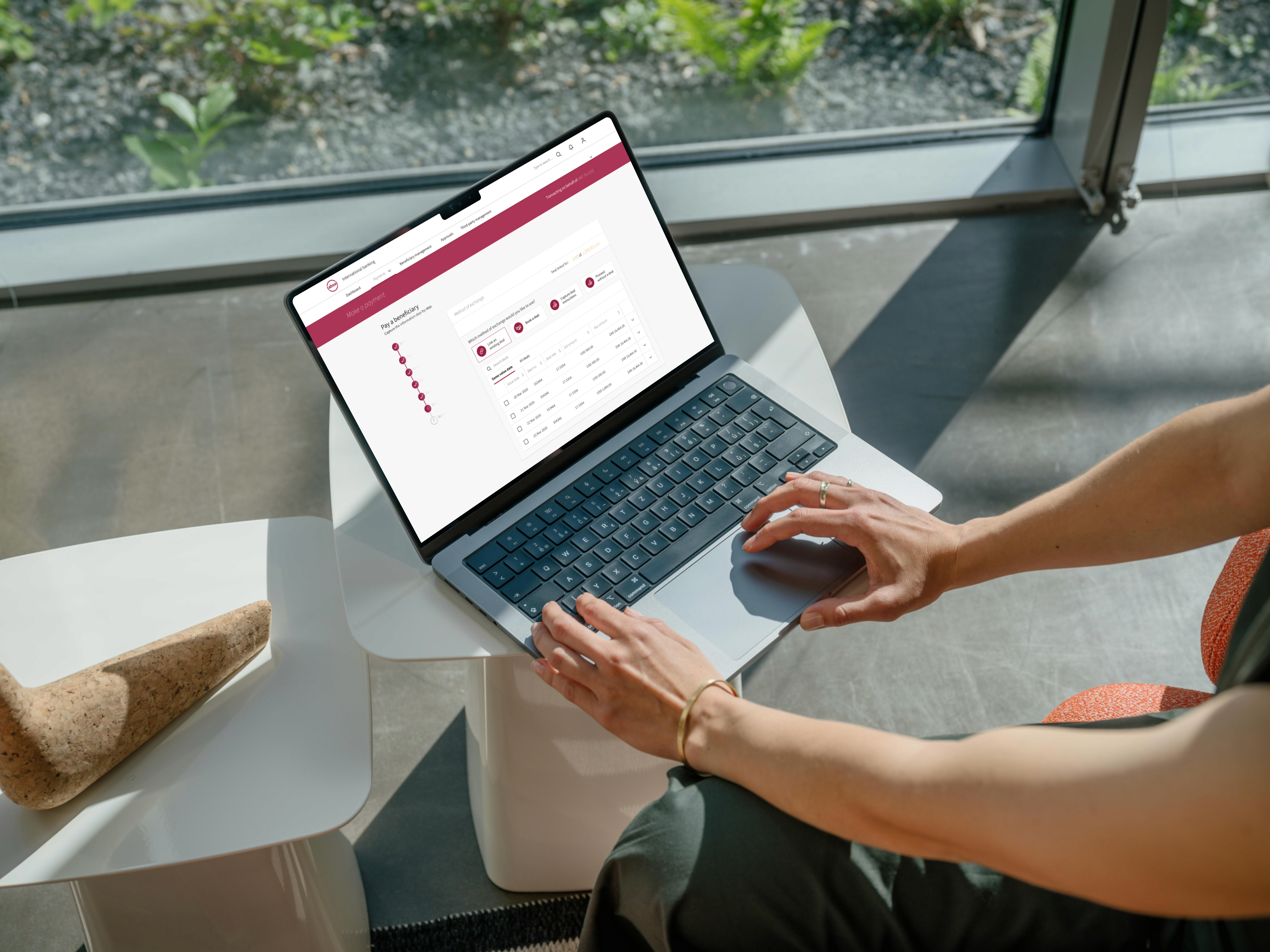
Absa CIB- International Payments
Simplifying international payments at corporate scale
00
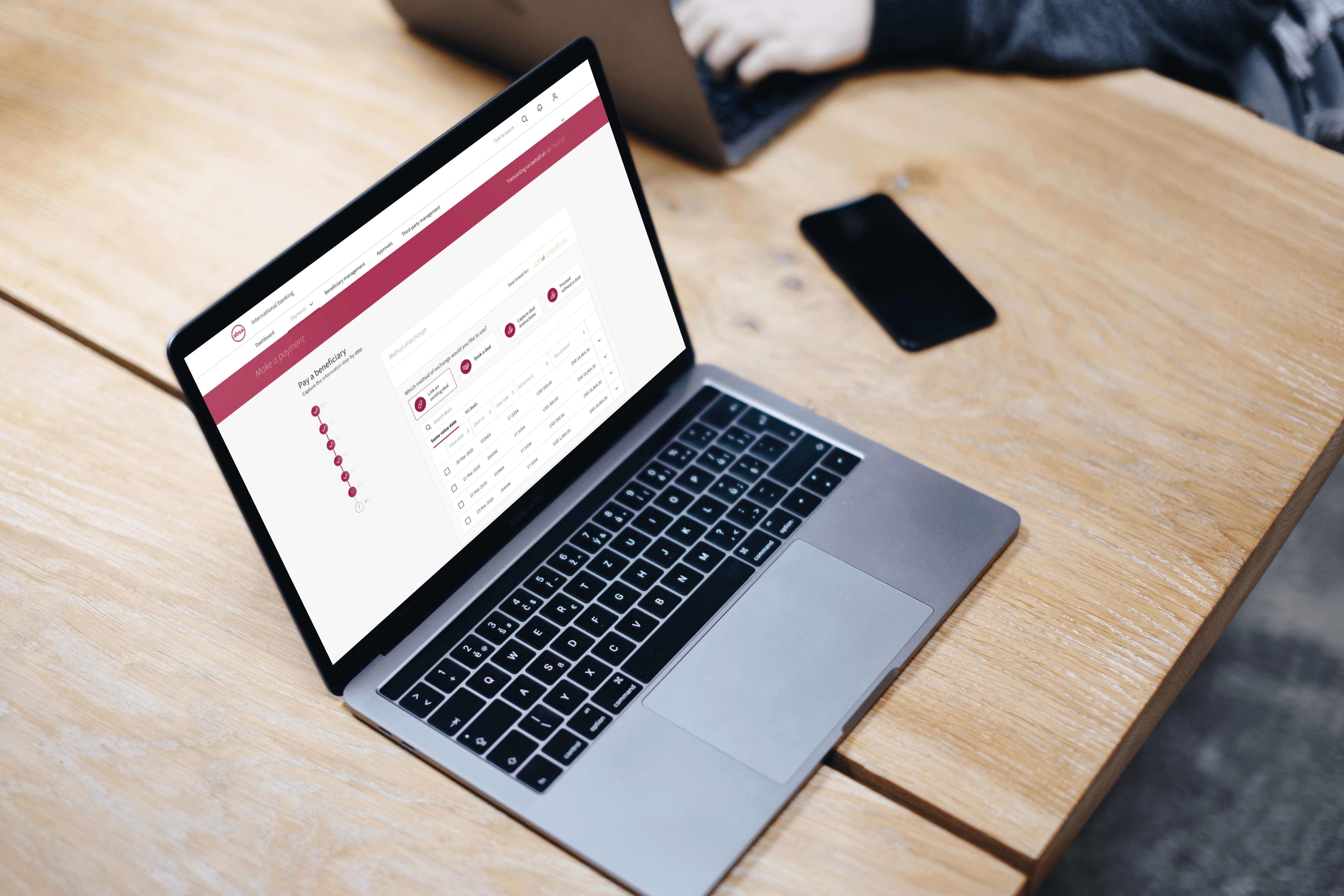
problem
problem
Corporate banking clients were managing international payments across three separate legacy platforms - one for deal creation and exchange, one for local beneficiary payments, and one for cross-currency international transfers. The fragmentation slowed clients down, the platforms were unreliable, and poor UX was generating a high volume of support calls that put sustained pressure on the business. Bulk payments required clients to populate a spreadsheet in a rigid, undocumented format - a process so unintuitive it was a consistent source of errors and frustration.
solution
A unified strategic payments platform consolidating all payment functionality into a single, intuitive channel — built to support clients' full payment workflow without switching contexts. The bulk payment experience was redesigned from the ground up, replacing the opaque spreadsheet format with a guided, validated upload flow that eliminated formatting errors before submission.
overview
The challenge was not simply redesigning a payments interface — it was enabling a seamless transition from fragmented legacy systems to a unified, strategic platform without disrupting critical financial workflows.
I worked within Absa CIB’s Global Payments team to design a digital channel that could support complex international payment scenarios while improving usability, efficiency, and clarity. The core challenge was balancing the depth of functionality required by corporate clients with an experience that felt intuitive and consistent.
The outcome was a structured, scalable experience that simplified complex payment journeys, reduced friction in high-frequency tasks, and supported the migration of users onto a more modern platform.
my role
I led UX and front-end design across the product lifecycle, working across:
Defining end-to-end payment journeys and interaction patterns
Conducting user and industry research
Translating requirements into scalable UX solutions
Collaborating with product, business, and engineering stakeholders
Designing and testing high-fidelity concepts aligned to Absa’s design system
research
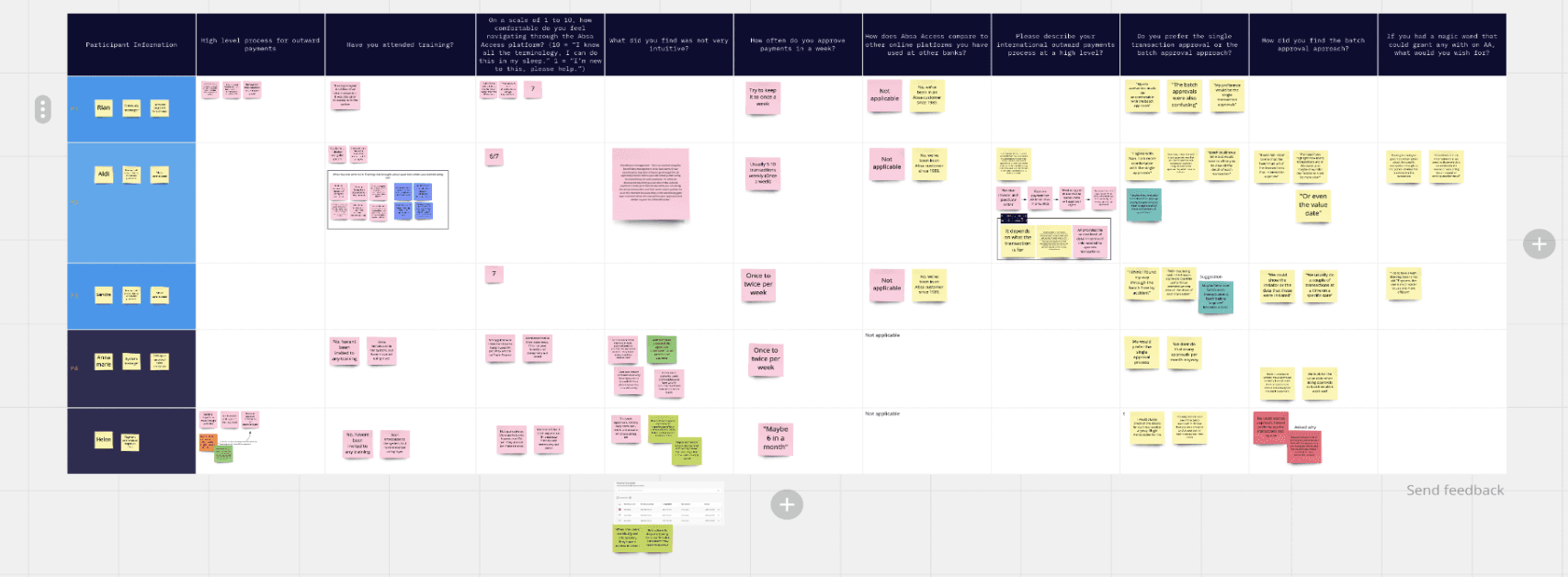
To understand how clients interacted with existing platforms, we conducted observational research and interviews across multiple regions, focusing on real-world usage and workflows.
My research focused on —
• Understanding how corporate users initiate and manage international payments
• Identifying inefficiencies across legacy platforms
• Mapping critical workflows and dependencies
• Validating assumptions around key functionality and usage patterns
• Analysing friction points in high-frequency payment tasks
key findings
• Fragmentation across systems created inefficiency
Users had to navigate multiple platforms, increasing time and cognitive load
• Workflows were highly structured and repeat-driven
Users relied on consistency and predictability for efficiency
• Visibility and control were critical
Users needed clear oversight of payment status, approvals, and history
• Complexity was expected — but needed to be manageable
Users accepted complexity, but required clarity and structure
• Small usability issues had large operational impact
Even minor friction slowed down high-volume workflows significantly
year
2023
timeframe
1 Year, 9 Months
tools
Figma, Maze, Miro
category
UI/UX
01